Created to WORK, Saved to REST: Let Us Examine Ourselves Before Our Day of Judgment
Ecclesiastes 3:17
“I said in mine heart, God shall judge the righteous and the wicked: for there is a time there for every purpose and for every work.”King James Version (KJV)
"And let the beauty of the LORD our God be upon us: and establish* thou the work of our hands upon us; yea, the work of our hands establish thou it." Psalm 90:17 KJV
"Of the increase of his government and peace there shall be no end, upon the throne of David, and upon his kingdom, to order it, and to establish* it with judgment and with justice from henceforth even for ever. The zeal of the LORD of hosts will perform this." Isaiah 9:7 KJV
*Establish means to CREATE, BUILD.The word establish means to start, create, prove, or bring something into existence so that it lasts or becomes widely accepted
"For we are his workmanship, created in Christ Jesus unto good works, which God hath before ordained that we should walk in them." Ephesians 2:10 KJV
"Comfort your hearts, and stablish you in every good word and work." 2 Thessalonians 2:17 KJV
"Every man's work shall be made manifest: for the day shall declare it, because it shall be revealed by fire; and the fire shall try every man's work of what sort it is." 1 Corinthians 3:13 KJV
“Marvel not at this: for the hour is coming, in the which all that are in the graves shall hear his voice, And shall come forth; they that have done good, unto the resurrection of life; and they that have done evil, unto the resurrection of damnation.” John 5:28-29 KJV
“Blessed and holy is he that hath part in the first resurrection: on such the second death hath no power, but they shall be priests of God and of Christ, and shall reign with him a thousand years.” Revelation 20:6 KJV
“And I saw the dead, small and great, stand before God; and the books were opened: and another book was opened, which is the book of life: and the dead were judged out of those things which were written in the books, according to their works. And the sea gave up the dead which were in it; and death and hell delivered up the dead which were in them: and they were judged every man according to their works. And death and hell were cast into the lake of fire. This is the second death. And whosoever was not found written in the book of life was cast into the lake of fire.” Revelation 20:12-15 KJV
Stop for a minute and think about the words WORK and CREATE. Every single soul we meet is doing both actions from the moment we are born. We are designed this way in the likness of our Creator Jesus Christ (Genesis 1:26, Colossians 1:16). This study is a culmination of over 20 of my previous blog studies and notes which I have combined here and outlined for our study.
AI disclosure: I use AI (Claude, Opus 5.5 and higher by Anthropic - mostly as well as Super Grok XAI and Perplexity to scrape - Scraping is a gathering step, not an understanding step: ) as a research tool for concordance, lexicon and etymology work and for historical context from my approved pre-1876 KJB commentators, per my 2022 post on how to study the King James Bible. I also use Claude Opus 5.5 to prepare post outlines for quick review, and I review and approve each one. This reply was drafted at my direction from my own arguments and Scriptures; I reviewed and approved every line. The words, positions, and responsibility are mine. The King James Bible remains the sole authority.
Creation and Work: A KJV Study
The Third Heaven Traveler — study outline. All scripture KJV.
In this study I want to reader and viewer of the video to consider the following including the title:
Establish the Work of Our Hands: From Creation’s Rest to the Fire That Tries Every WorkWhat Are You Creating? Work, Travail, and Rest from Eden to the Judgment Seat of Christ
Created to WORK, Saved to REST: Let Us Examine Ourselves Before our Day of Judgment
What are you Creating?
Forsake Lying Vanities! Trade Your Talent Boldly – No Fear, Go 100% in His Power
Trading What We Have Received: The Parables of the Talents and Minas
Let us Examine Ourselves
What is the BEMA SEAT JUDGMENT OF JESUS CHRIST and THE GREAT WHITE THRONE JUDGMENT?
The REWARD of The Inheritance in Striving Lawfully
The Essential Necessity of Understanding the BEMA - Our Crowns - Our Rule with Christ
THE BRIDESMAIDS - PARABLE OF THE 10 VIRGINS - Are going to GET Exactly what they WANT
Exposing the Wolf Hyper Dispensationalist - Universalist
Cockpit recording of female pilot seconds before her jet crashed:
: "Look outside, Jack... Holy f*ck, we're out of time."
https://x.com/healthranger/status/2117013147999756507?a=W6QUKFjblwuYwVagApw&s=46
Opening: The Whole Arc
God creates and rests. Man is given work. The fall curses it. Christ travails and finishes it. We rest in Him by grace. In the new creation, we serve Him forever.
Headline verse: "And let the beauty of the LORD our God be upon us: and establish thou the work of our hands upon us; yea, the work of our hands establish thou it." (Psalm 90:17)
- Work: ma'aseh (H4639), a deed, act, or thing made; from asah (H6213). Moses' prayer that God would make our handiwork lasting.
- Establish: kun (H3559), to set up, make firm. It runs through Exodus 15:17, Deuteronomy 32:6, and Psalm 90:17.
Ma'aseh: the work of hands
- God's handiwork first: "the work of thy fingers" (Ps 8:3); "the firmament sheweth his handywork" (Ps 19:1); "we all are the work of thy hand" (Isa 64:8).
- The curse on handiwork: "This same shall comfort us concerning our work and toil of our hands, because of the ground which the LORD hath cursed." (Gen 5:29) Work: ma'aseh; toil: itstsabon.
- God's work before ours: "Let thy work appear unto thy servants" (Ps 90:16), poal (H6467), then "establish thou the work of our hands" (Ps 90:17). Grace before works.
- The doubled request: "the dream was doubled... because the thing is established by God." (Gen 41:32)
Kun: establish
- Kun (H3559): to stand upright, be firm; set up, prepare, establish. English from Latin stabilire, "to make stable" (from stare, to stand). OED: to set up on a firm or permanent basis.
- In creation: "the moon and the stars, which thou hast ordained" (Ps 8:3); "by understanding hath he established the heavens" (Prov 3:19).
- The three columns: "the Sanctuary, O Lord, which thy hands have established" (Exod 15:17); "hath he not made thee, and established thee?" (Deut 32:6), asah + kun; "establish thou the work of our hands" (Ps 90:17).
- How work is established: "Commit thy works unto the LORD, and thy thoughts shall be established." (Prov 16:3) Ma'aseh + kun. "The steps of a good man are ordered by the LORD." (Ps 37:23)
- New Testament: sterizo (G4741), "stablish." "Stablish you in every good word and work" (2 Thess 2:17); "make you perfect, stablish, strengthen, settle you" (1 Pet 5:10).
- The foundation: "For other foundation can no man lay than that which is laid, which is Jesus Christ." (1 Cor 3:11)
Key question: What are you creating?
I. God the Creator and Worker (Genesis 1–2)
- "In the beginning God created the heaven and the earth." (Gen 1:1)
- "And on the seventh day God ended his work which he had made; and he rested on the seventh day from all his work which he had made." (Gen 2:2)
- "...all his work which God created and made." (Gen 2:3)
- Christ the Creator: "For by him were all things created... all things were created by him, and for him." (Col 1:16)
Word study
- Create: bara (H1254). In its basic form, used with God alone as subject. English from Latin creare, "to bring forth." OED: to bring into being, especially by divine power.
- Work: melakah (H4399), occupation or commissioned work; related to malak (H4397), messenger. English from Old English weorc, a cousin of Greek ergon.
- Made: asah (H6213), to do, fashion, accomplish.
II. Man in the Image and Likeness
- "Let us make man in our image, after our likeness: and let them have dominion." (Gen 1:26)
- "In the image of God created he him; male and female created he them." (Gen 1:27)
- Body, soul, and spirit: "your whole spirit and soul and body be preserved blameless." (1 Thess 5:23)
Word study
- Image: tselem (H6754), a shaped figure or representation, from a root meaning "shade." Like a king's image showing his rule, which is why dominion follows.
- Likeness: demuth (H1823), from damah (H1819), to compare or resemble. Passed from father to son: Adam "begat a son in his own likeness, after his image." (Gen 5:3)
- Principle: man never bara's. He makes (asah) and builds (banah) within God's creation. A God-given desire to create is part of the likeness.
Formed: the Potter's word
- "And the LORD God formed man of the dust of the ground, and breathed into his nostrils the breath of life; and man became a living soul." (Gen 2:7)
- Formed: yatsar (H3335), to mould or fashion, as a potter shapes clay. Its participle yotser means "potter."
- "Arise, and go down to the potter's house... as the clay is in the potter's hand, so are ye in mine hand." (Jer 18:2, 6)
- "Hath not the potter power over the clay, of the same lump to make one vessel unto honour, and another unto dishonour?" (Rom 9:21)
- Three verbs of man's making: bara (created, Gen 1:27), asah (made, Gen 1:26), yatsar (formed, Gen 2:7).
III. Adam Goes to Work
- "There was not a man to till the ground." (Gen 2:5)
- "And the LORD God took the man, and put him into the garden of Eden to dress it and to keep it." (Gen 2:15)
Word study
- Dress / till: abad (H5647), to work, serve, worship.
- Keep: shamar (H8104), to guard, watch over, observe.
Adam's first creative act: naming
- "...to see what he would call them: and whatsoever Adam called every living creature, that was the name thereof." (Gen 2:19)
- Call: qara (H7121), the same verb as "God called the light Day." (Gen 1:5) Adam doesn't bara; he qara's. Naming is creating by word, and the first scholarship in the Bible.
- Naming leads to discovery: "but for Adam there was not found an help meet for him." (Gen 2:20)
IV. Interlude: Eve, the Help Meet
- "It is not good that the man should be alone; I will make him an help meet for him." (Gen 2:18)
Word study
- Help: ezer (H5828), used most often of God Himself. "My help cometh from the LORD." (Ps 121:2) Paired with "shield": "he is their help and their shield." (Ps 115:9) A protecting ally, reinforcements.
- Succour: azar (H5826). Latin succurrere, "to run to the aid of." Christ "is able to succour them that are tempted." (Heb 2:18)
- Meet: kenegdo, from neged (H5048), "corresponding to, face to face." "Meet" is old English for fitting.
- Rib: tsela (H6763), usually "side." From his side, to stand at his side.
- Made: banah (H1129), "to build." A third creation verb.
- Eve: Chavvah (H2332), "mother of all living." (Gen 3:20)
Why Adam needed her
- Naming showed every creature had a counterpart but him.
- The image is "male and female." (Gen 1:27)
- The commission needed two: "Be fruitful, and multiply." (Gen 1:28)
- Guarding needs an ally, and the serpent came next. (Gen 3:1)
- Only one face to face could answer him in spirit, soul, and body.
Fulfilment: Ephesians 5:25–32. "This is a great mystery: but I speak concerning Christ and the church." The bride comes from the opened side of the last Adam. (John 19:34)
V. The Fall and Cursed Labour
- "Adam was not deceived, but the woman being deceived was in the transgression." (1 Tim 2:14)
- Adam failed to shamar, to keep.
- "In sorrow shalt thou eat of it... In the sweat of thy face shalt thou eat bread." (Gen 3:17, 19)
- Sorrow: itstsabon (H6093), toil or painful labour. The same word for Eve's childbearing (Gen 3:16) and Adam's tilling.
- God goes to work: "Unto Adam also and to his wife did the LORD God make coats of skins, and clothed them." (Gen 3:21)
Labour and travail
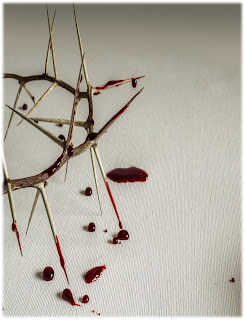
- French travail, Spanish trabajo: from Latin tripalium, a three-staked instrument of torture. Work was named from suffering.
- Latin labor: toil, hardship. English "labour" for childbirth from the late 1500s.
- Hebrew amal (H5999): toilsome labour (Ecclesiastes).
- Greek odin (G5604): birth pangs. Mochthos (G3449): "labour and travail." (2 Thess 3:8)
VI. Christ's Travail and Finished Work
- "He shall see of the travail of his soul, and shall be satisfied." (Isa 53:11) Travail: amal.
- "My Father worketh hitherto, and I work." (John 5:17) Ergazomai (G2038).
- "I have finished the work which thou gavest me to do." (John 17:4)
- "It is finished." (John 19:30) Teleo (G5055).
- Mary supposes Him "the gardener." (John 20:15) The last Adam in a garden.
- "A woman when she is in travail hath sorrow... for joy that a man is born into the world." (John 16:21)
- "The whole creation groaneth and travaileth in pain together until now." (Rom 8:22)
VII. By Grace, Not of Works (Pauline Mystery)
- "The revelation of the mystery." (Rom 16:25) Musterion (G3466).
- "For by grace are ye saved through faith... Not of works, lest any man should boast." (Eph 2:8–9)
- "And if by grace, then is it no more of works." (Rom 11:6)
- "To him that worketh not, but believeth..." (Rom 4:5)
- "For we are his workmanship, created in Christ Jesus unto good works." (Eph 2:10) Poiema (G4161); ktizo (G2936).
- "If any man be in Christ, he is a new creature." (2 Cor 5:17) Kainos (G2537), new in kind.
Answering the "greasy grace" charge
- "Shall we continue in sin, that grace may abound? God forbid." (Rom 6:1–2)
- "For the grace of God that bringeth salvation... teaching us that, denying ungodliness and worldly lusts, we should live soberly." (Titus 2:11–12)
- Objection to address: "Even so faith, if it hath not works, is dead, being alone." (James 2:17)
- Objection to address: Hebrews 6:4–6.
- Works as the proof of living faith, not its cause. See Solving the Paradox of Justification by FAITH ALONE and Justification by WORKS (The Third Heaven Traveler, January 2025).
VIII. Entering His Rest
- Christ "sat down on the right hand of the Majesty on high." (Heb 1:3)
- "The works were finished from the foundation of the world." (Heb 4:3)
- "He that is entered into his rest, he also hath ceased from his own works, as God did from his." (Heb 4:10) Katapausis (G2663).
IX. The Time of Testing
Romans 1: the lost at work
- Men "who hold the truth in unrighteousness." (Rom 1:18)
- "God gave them over to a reprobate mind." (Rom 1:28) Adokimos (G96), "failing the test."
- "Who knowing the judgment of God... not only do the same." (Rom 1:32)
- "In whom the god of this world hath blinded the minds of them which believe not, lest the light of the glorious gospel of Christ, who is the image of God, should shine unto them." (2 Cor 4:4) Blinded: typhloo (G5186). Image: eikon (G1504), the Greek counterpart of tselem: Christ is the true image that Adam bore.
- Approved vs. reprobate: dokimos (G1384), tested and approved like metal in fire; dokimazo (G1381), to test or prove; adokimos (G96), "not approved," rendered "reprobate." English reprobate from Latin reprobare, rejected after testing.
- Romans 1:28 wordplay: "did not like" is ouk edokimasan, "they did not approve" God, so God gave them over to an adokimos, unapproved, mind.
- "Examine yourselves... prove your own selves... except ye be reprobates." (2 Cor 13:5) Prove: dokimazo; reprobates: adokimos.
From The Third Heaven Traveler: Let Us Examine Ourselves
- Let Us EXAMINE Ourselves (January 2025)
- Again, Let us EXAMINE Ourselves. Philadelphia vs Laodicea (November 2025)
- "Study to shew thyself approved unto God, a workman that needeth not to be ashamed, rightly dividing the word of truth." (2 Tim 2:15) Approved: dokimos (G1384). Workman: ergates (G2040), from ergon, work.
The wilderness generation (Songs of Moses connection)
- Exodus 15 and Deuteronomy 32: the Songs of Moses.
- Only two of the original generation entered: "save Caleb the son of Jephunneh, and Joshua the son of Nun." (Num 14:30)
- "They could not enter in because of unbelief." (Heb 3:19)
- "Let us therefore fear, lest... any of you should seem to come short of it." (Heb 4:1)
- Psalm 90, "A Prayer of Moses": "So teach us to number our days." (Ps 90:12) "Establish thou the work of our hands." (Ps 90:17)
- Kun, "establish," runs through Exodus 15:17, Deuteronomy 32:6, and Psalm 90:17.
Philadelphia and Laodicea: "I know thy works"
- Philadelphia: "I have set before thee an open door... I also will keep thee from the hour of temptation." (Rev 3:8, 10)
- Laodicea: "Thou art neither cold nor hot." (Rev 3:15)
Works tried by fire: What are you creating?
- "Every man's work shall be made manifest: for the day shall declare it, because it shall be revealed by fire; and the fire shall try every man's work of what sort it is." (1 Cor 3:13)
- "If any man's work abide which he hath built thereupon, he shall receive a reward. If any man's work shall be burned, he shall suffer loss: but he himself shall be saved; yet so as by fire." (1 Cor 3:14–15)
- "For we must all appear before the judgment seat of Christ; that every one may receive the things done in his body." (2 Cor 5:10)
- Try: dokimazo (G1381), to test and approve, as metal in fire. The opposite of adokimos, reprobate, in Romans 1:28.
- Judgment seat: bema (G968), the seat of reward.
- Link back to Psalm 90:17: only the work God establishes abides the fire. Salvation is by grace; the believer's works are tried for reward.
Trading what we have received: the Talents and the Minas
See “Trading What We Have Received: The Parables of the Talents and Minas” (The Third Heaven Traveler, June 25, 2026): https://www.thethirdheaventraveler.com/2026/06/received-as-gift-from-jacob-to-israel.html
Synopsis: Every servant’s portion came from the Master; nothing was self-generated. “What hast thou that thou didst not receive?” (1 Cor 4:7) The faithful servants received, recognized, and traded, and were given increase and rule. The fearful servant buried his portion and lost it. Stewardship is the proof that we know we have received everything from Christ, and how we steward determines our rewards, crowns, and rule as kings and priests in the Millennial Kingdom.
“Occupy till I come.” (Luke 19:13) “Well done, thou good and faithful servant... I will make thee ruler over many things: enter thou into the joy of thy lord.” (Matt 25:21)
Connecting the dots:
- Trade = work. “Traded” in Matthew 25:16 is ergazomai (G2038), the same verb as “My Father worketh hitherto, and I work.” (John 5:17) Trading is working.
- Abad again. Its Hebrew counterpart is abad (H5647), Adam’s “dress” in Genesis 2:15: work, service, and worship. The servants do in the kingdom what Adam was given in Eden.
- Grace first, then work. The talents are received as gift before any trading begins, just as we are His workmanship before we walk in good works. (Eph 2:10)
- Christ the model servant. “The Son of man came not to be ministered unto, but to minister.” (Matt 20:28) He “took upon him the form of a servant.” (Phil 2:7) The Creator became the Worker.
- Tried at the return. The Master’s reckoning matches the fire that “shall try every man’s work” (1 Cor 3:13) at the judgment seat of Christ. (2 Cor 5:10)
- Established work. Faithful trading is the answer to Moses’ prayer: “establish thou the work of our hands.” (Ps 90:17)
- The buried talent. The servant who hid his portion out of fear is the opposite of “What are you creating?” He made nothing with what he received.
X. New Creation: Serving Forever
- "Behold, I make all things new." (Rev 21:5) Kainos.
- "There shall be no more curse... and his servants shall serve him." (Rev 22:3) Latreuo (G3000): abad restored.
Closing Call
"Behold, now is the accepted time; behold, now is the day of salvation." (2 Cor 6:2)
This is the time of trial and testing. Make the right call. Find Jesus Christ now.

Comments
Post a Comment