They Prayed for a Remedy for the People, and God Showed Them the Remedy
1 Corinthians 10:11
“Now all these things happened unto them for ensamples: and they are written for our admonition, upon whom the ends of the world are come.”
ensample vs example KJV very important here:
https://www.thethirdheaventraveler.com/2025/10/why-king-james-bible-distinguishes.html
Philippians 2:12
“Wherefore, my beloved, as ye have always obeyed, not as in my presence only, but now much more in my absence, work out your own salvation with fear and trembling.”
Colossians 2:8
“Beware lest any man spoil you through philosophy and vain deceit, after the tradition of men, after the rudiments of the world, and not after Christ.”
The word remedy appears only three times in the King James Bible. All three are in the Old Testament, and all three translate the same Hebrew word.
"But they mocked the messengers of God, and despised his words, and misused his prophets, until the wrath of the LORD arose against his people, till there was no remedy." — 2 Chronicles 36:16
"Therefore shall his calamity come suddenly; suddenly shall he be broken without remedy." — Proverbs 6:15
"He, that being often reproved hardeneth his neck, shall suddenly be destroyed, and that without remedy." — Proverbs 29:1
In accordance with the Fair Use Under Title 17 U.S.C. § 107 The content provided on this website is intended for educational and informational purposes only. Any copyrighted material included herein is used under the doctrine of fair use, as outlined in Title 17 U.S. Code § 107. This includes use for purposes such as criticism, comment, news reporting, teaching, scholarship, or research. The use of such material is not intended to infringe upon the copyright holder's rights.
AI Disclosure
This post is based on my own blogs and KJV-only doctrine. I provided my prior writings and material to AI tools for assistance with Scripture harmonization, etymology, lexicon, concordance, and historical research drawn from my online Logos Pro account. In instances where I expose false teachers, I use AI to explore hours of their material and study it. The sheer volume of my work requires this to be more productive—what once took me weeks to compile I am now able to complete in hours.
All content was carefully reviewed and edited by me so that it aligns with the doctrine I have already published. Each line produced with AI assistance has been edited to ensure it complies with the doctrine of this site and references my blog posts in the Essential Reading and Essential Study Links sections. I take full responsibility for the final text. The King James Bible remains the sole authority.
My blogs and this blog are not written according to Chicago style, MLA, APA, or any other formal academic citation system. References are handled according to the standards of this site rather than scholarly conventions. The primary authority is the King James Bible. The doctrine presented is drawn from the King James text and from the teaching already set forth in my own blogs. When commentary from other theologians is used, it is my practice to identify the source directly (for example: “Matthew Poole states in his commentary on Ezekiel 36…”).
The final content aligns with the positions I have already published. I remain fully responsible for every statement that appears. The King James Bible is the sole standard by which the teaching on this site is measured." End Quote.
Priest Dies After Wooden Cross Falls on Him | Prophetic Warning
https://youtu.be/zV-dzk8ZJEc?si=DXFkPRONfE8TMs3S
I offer a better English Translation that is more closely aligned to the power in Spanish (Note: I am bilingual and have a minor degree in Spanish):
“For the needs* of all people, in order that the Lord may remedy them with His mercy.We beseech the Lord.
Listen, O Lord, to our prayer.”
Conceptual (epistemological) difference
- In order that locks onto pure intention: prospective, non-factive, agent’s deliberate ordering of means toward a known goal.
- So that is flexible: can mark intentional purpose or bare result (what actually followed). Purpose historically grew out of “result + intention.”
They were literally praying a strong command/plea to God to listen to their plea that he actively with deliberate intention provide a cure for the salvation of mankind (A means of REDEMPTION FOR MANKIND) and remove that which is harmful...
The deadly "disease" is human sin, and God's perfect cure is executed through the legal act of justification and the sacrificial work of propitiation.
The foundational intersection of these concepts is recorded in Romans 3:24–25, where God perfectly bridges his ultimate spiritual remedy with legal righteousness:
Romans 3:24–25 (KJV)
24 Being justified freely by his grace through the redemption that is in Christ Jesus:
25 Whom God hath set forth to be a propitiation through faith in his blood, to declare his righteousness for the remission of sins that are past, through the forbearance of God;
1. Propitiation (The Sacrificial Remedy)
Propitiation (hilasmos / hilasterion) refers to the appeasement of divine wrath and the satisfaction of justice through a substitutionary sacrifice. Because God is holy, His wrath burns against sin; Jesus bears that wrath to provide a spiritual cure.
1 John 2:2 (KJV)
And he is the propitiation for our sins: and not for ours only, but also for the sins of the whole world.
1 John 4:10 (KJV)
Herein is love, not that we loved God, but that he loved us, and sent his Son to be the propitiation for our sins.
2. Justification (The Legal Remedy)
Justification is the legal act of God where He declares a guilty sinner to be righteous. It is not merely the pardon of sin (returning a person to zero); it is the actual imputation of Christ's perfect righteousness to the believer's account.
Romans 5:1 (KJV)
Therefore being justified by faith, we have peace with God through our Lord Jesus Christ:
Romans 5:9 (KJV)
Much more then, being now justified by his blood, we shall be saved from wrath through him.
Galatians 2:16 (KJV)
Knowing that a man is not justified by the works of the law, but by the faith of Jesus Christ, even we have believed in Jesus Christ, that we might be justified by the faith of Christ, and not by the works of the law: for by the works of the law shall no flesh be justified.
*needs =
Brief Theological Note on “Needs”
In the context of the Prayer of the Faithful, “needs” (necesidades) is a broad term that includes both temporal and spiritual necessities—physical hardship, justice, peace, health, and the life of the Church.
However, in Biblical Doctrine, and I'm sure in Catholicism they believe that the first and foremost need of all people is salvation: reconciliation with God through Jesus Christ, the forgiveness of sins, and eternal life. All other needs are secondary to this ultimate need.
Thus, while the petition literally asks for the remedy of every kind of need, its deepest theological meaning is that the Lord would remedy humanity’s greatest need—its separation from God—by His mercy.
Compassionate Disclaimer
On Saturday, October 17, 2026, Father Patricio Alfredo Sánchez Molinari stood at the altar of Nuestra Señora del Perpetuo Socorro (Our Lady of Perpetual Help) in southern Guayaquil, Ecuador, and led his people in prayer.
This incident at this Catholic Church in Ecauador is a startling reminder to all of us who claim to be Christians.
I love Catholic people and have deep respect for many who sincerely love the Lord Jesus Christ. This reflection is not an attack on Catholics or on any individual. It is offered as a solemn warning to all of us—who claim the name of Christ.
Scripture calls every believer to “work out your own salvation with fear and trembling” (Philippians 2:12). In that spirit, I urge all of us to examine our doctrine carefully according to the Word of God, receiving the King James Bible as the final authority rather than the traditions of men. As Colossians 2:8 warns: “Beware lest any man spoil you through philosophy and vain deceit, after the tradition of men, after the rudiments of the world, and not after Christ.”
My desire is not to wound, but to point all of us back to the sufficiency and authority of Scripture alone, so that we may stand approved before God.
They Prayed for Remedy—Then the Cross Fell and Mercy Was Displayed (Mercy Displayed)*
In Christian theology, the cross is the definitive display of mercy. The Latin misericordia and the Greek eleos both describe God’s disposition to show compassion toward the undeserving by bearing the cost of their guilt. Scripture presents the crucifixion as the moment when that mercy became public and irreversible: “God commendeth his love toward us, in that, while we were yet sinners, Christ died for us” (Romans 5:8 KJV).
The prayer being offered when the crucifix fell asked that the Lord would “remedy” the needs of the people “with his mercy.” The Hebrew root behind the KJV’s three uses of “remedy” (marpeʾ, H4832, from raphaʾ) denotes healing or restoration that can reach a point of absence. Those passages (2 Chronicles 36:16; Proverbs 6:15; 29:1) describe situations in which repeated rejection of God’s word leaves no further healing available. The sudden fall of the cross during a petition for mercy therefore places two realities side by side: the human request for ongoing remedy, and the already-displayed remedy of the cross itself that has frankly been compromised by man's tradition and philosophy that is not doctrine.
Essential Background Study Links:
Let Us Examine Ourselves: Work Out Your Salvation With Fear and Trembling
https://www.thethirdheaventraveler.com/2025/04/the-terror-that-awaits-false-prophets.html
No Remedy: The Prayer for Mercy Ended as the Cross Fell
·
A Prayer Interrupted
On Saturday, October 17, 2026, Father Patricio Alfredo Sánchez Molinari stood at the altar of Nuestra Señora del Perpetuo Socorro (Our Lady of Perpetual Help) in southern Guayaquil, Ecuador, and led his people in prayer. The Mass was streamed live. During the prayers, the large wooden crucifix mounted on the wall behind him came loose, fell forward, and struck him on the head. He never saw it coming, because he was facing his congregation.
Parishioners rushed to help him and begged for an ambulance. Hours later, the Archdiocese of Guayaquil confirmed his death in a statement signed by Cardinal Luis Cabrera Herrera. The statement said their brother had "gone to the House of the Father." As of this writing, no one has explained why the cross came loose.
Father Sánchez was a member of the Congregation of the Most Holy Redeemer, the Redemptorists. He had served for years as parish priest in Vinces before coming to Perpetuo Socorro.
According to a transcription of the livestream, the petition being prayed was: "Por las necesidades de todos los hombres, para que el Señor las remedie con su misericordia." In English: "For the needs of all people, that the Lord may remedy them with His mercy." The congregation then answered, "Lord, hear our prayer."
A man who belonged to a congregation named for the Redeemer died beneath the cross of the Redeemer, while asking God to remedy the needs of the world.
A note on the timing: news reports confirm the cross fell during the prayers, but the original livestream has been taken down. The exact second it fell should be treated with care.
What "Remedy" Really Means
The Mass was prayed in Spanish, so the word on the priest's lips was remedie, from remediar. The Spanish and English words are twins. Both come from the Latin remedium: "a cure, a medicine, that which restores health."
Remedium is built from re- ("again," or simply an intensifier) and mederi, "to heal." The same root gives us medicine and medical. A remedy, at its core, is not a favor or a convenience. It is healing. It is what makes a broken thing whole again.
English borrowed the noun around 1200 through Old French, first in a spiritual sense: a cure for sin, temptation, or evil.
So when the congregation prayed that the Lord would "remedy" the needs of all people "with His mercy," the grammar is simple. Them points back to the needs. The needs are treated like wounds, and mercy is the medicine.
"Without Remedy": Marpe in the King James Bible
The word remedy appears only three times in the King James Bible. All three are in the Old Testament, and all three translate the same Hebrew word.
"But they mocked the messengers of God, and despised his words, and misused his prophets, until the wrath of the LORD arose against his people, till there was no remedy." — 2 Chronicles 36:16
"Therefore shall his calamity come suddenly; suddenly shall he be broken without remedy." — Proverbs 6:15
"He, that being often reproved hardeneth his neck, shall suddenly be destroyed, and that without remedy." — Proverbs 29:1
The Hebrew word is מַרְפֵּא, marpe' (Strong's H4832). It means a cure, a medicine, healing, or soundness. It comes from the verb רָפָא, rapha' (H7495), "to heal, to mend, to make whole." That is the same root in the name Jehovah-Rapha, "I am the LORD that healeth thee" (Exodus 15:26).
In the Ancient Hebrew pictographs, as taught by Jeff Benner's Ancient Hebrew Lexicon, the root רפ pairs the resh (a man's head) with the pey (an open mouth). Benner reads the picture as something opened or broken, like a wound, that must be mended and closed. Healing is the restoring of what has been torn open.
Notice the pattern in all three verses. Marpe' appears with a negative: ein marpe', "there is no healing." Each verse describes a long road that ends at a closed door.2 Chronicles 36:16 describes a whole nation. God sent His messengers "rising up betimes" (36:15), because He had compassion on His people. They mocked the messengers again and again. Only after long patience did the wrath come, and Babylon followed.
Proverbs 6:15 describes the "naughty person, a wicked man" (6:12) who "deviseth mischief continually" and sows discord. His ruin is sudden, but his wickedness was not.
Proverbs 29:1 describes the man who is "often reproved" and still hardens his neck. The warnings came first, many times over.
The point is crucial. In Scripture, "no remedy" never falls on someone out of nowhere. It is the end of a long history of mocking God's word, refusing correction, and hardening the heart. Marpe' was offered, and offered, and offered, before it was withdrawn. AND IN A TWIST OF FATE - THE TRUE REMEMDY IS GIVEN
They Asked for a Remedy
On Saturday, October 17, 2026, a congregation in Guayaquil, Ecuador, gathered at the church of Perpetuo Socorro, and the service was streamed live. They prayed for the needs of all people, "that the Lord may remedy them with His mercy." During those prayers, the large wooden cross on the wall behind the altar came loose and fell on the minister, Patricio Alfredo Sánchez Molinari. He died that day.
The whole world watched the clip. Most saw only a tragedy. But look at what was asked for, and what came down.
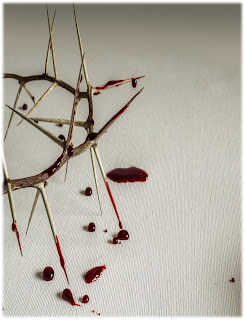
The people asked for a remedy. And before their eyes stood the one symbol in all history that points to the Remedy God has already given: the cross. They prayed for healing, and the picture of Calvary was in front of them the whole time.
This post is not about the man who died. Jesus warned us not to read a falling tower as a verdict on the people beneath it (Luke 13:4–5). It is about the question their prayer raises for every one of us: What is God's remedy for the needs of all people, and where is it found? The answer is not in a church building, a ritual, or a carved image. It is in the Word of God.
The Other Face of Marpe': Health, Cure, and Healing in His Wings
The King James Bible uses the English word remedy only three times (2 Chronicles 36:16; Proverbs 6:15; 29:1). All three translate the Hebrew מַרְפֵּא, marpe' (Strong's H4832), and all three speak of a point where there is "no remedy." It would be easy to read marpe' as a word of doom. It is not.
Marpe' appears about sixteen times in the Old Testament, and most of them are bright with promise. The KJV renders it as health, healing, cure, sound, wholesome, and yielding. It comes from the verb רָפָא, rapha' (H7495), "to heal, to mend, to make whole," the root of God's name Jehovah-Rapha: "I am the LORD that healeth thee" (Exodus 15:26). In Jeff Benner's Ancient Hebrew Lexicon, the root רפ pictures something torn open, like a wound, that must be mended. Marpe' is the closing of the wound.
Watch where Scripture says the healing comes from:
Verse
KJV wording
Where the healing comes from
Proverbs 4:22
"health to all their flesh"
God's words, kept in the heart
Proverbs 12:18
"the tongue of the wise is health"
Wise speech
Proverbs 13:17
"a faithful ambassador is health"
A faithful messenger
Proverbs 14:30
"A sound heart is the life of the flesh"
A healed, whole heart
Proverbs 15:4
"A wholesome tongue is a tree of life"
Gentle words
Proverbs 16:24
"health to the bones"
Pleasant words
Jeremiah 33:6
"I will bring it health and cure"
God Himself
Malachi 4:2
"with healing in his wings"
The Sun of righteousness
Notice what is missing from that list. Not one verse places marpe' in an object, a building, or a ceremony. The healing always comes from God's word, God's messenger, or God Himself.
Proverbs 13:17 is the key: "a faithful ambassador is health." The messenger carries the medicine. That is why 2 Chronicles 36:16 is so grave. When the people mocked God's messengers and despised His words, they were refusing the cure itself, "till there was no remedy."
And the last time marpe' appears in the Old Testament, it is pure hope: "But unto you that fear my name shall the Sun of righteousness arise with healing in his wings" (Malachi 4:2). The Old Testament closes by pointing to a Person. The Remedy is coming.
God Showed the Remedy: By His Stripes We Are Healed
The people prayed for a remedy. God answered that prayer two thousand years ago, on a hill outside Jerusalem.
Isaiah saw it seven centuries ahead: "But he was wounded for our transgressions, he was bruised for our iniquities: the chastisement of our peace was upon him; and with his stripes we are healed" (Isaiah 53:5). The word healed is nirpa', from רָפָא, rapha', the same root as marpe'. The healing word of the Old Testament runs straight to Calvary.
Peter takes it up in the Greek: "Who his own self bare our sins in his own body on the tree... by whose stripes ye were healed" (1 Peter 2:24). There the word is ἰάομαι, iaomai (G2390), "to cure, to make whole." Notice the tense: were healed. The remedy is not still waiting to be granted. It has been given.
God showed this pattern in the wilderness. When the people were dying from serpent bites, the remedy was something lifted up on a pole: "if a serpent had bitten any man, when he beheld the serpent of brass, he lived" (Numbers 21:9). Jesus applied it to Himself: "And as Moses lifted up the serpent in the wilderness, even so must the Son of man be lifted up: That whosoever believeth in him should not perish, but have eternal life" (John 3:14–15).
The needs of all people come down to one need. The deepest wound is sin, and the only remedy is the blood of Jesus Christ. "The blood of Jesus Christ his Son cleanseth us from all sin" (1 John 1:7). "Neither is there salvation in any other: for there is none other name under heaven given among men, whereby we must be saved" (Acts 4:12).
The Sun of righteousness that Malachi promised has risen. The Healer with "healing in his wings" came, was lifted up, and rose again. The congregation asked God for a remedy. God's answer was already hanging in front of them, in picture form.
Not the Tradition of Man: The Remedy Is a Person
Jesus spoke sharply about religion that adds man's customs to God's word: "Howbeit in vain do they worship me, teaching for doctrines the commandments of men... Making the word of God of none effect through your tradition, which ye have delivered" (Mark 7:7, 13). Paul warned the same: "Beware lest any man spoil you through philosophy and vain deceit, after the tradition of men, after the rudiments of the world, and not after Christ" (Colossians 2:8). To "spoil" is to carry off as plunder. Tradition does not add to Christ; it robs men of Him.
The Bible gives a striking example of a God-given remedy that men turned into tradition. The brass serpent was God's own healing sign in Numbers 21. But centuries later, the people were burning incense to it. So King Hezekiah "brake in pieces the brasen serpent that Moses had made: for unto those days the children of Israel did burn incense to it: and he called it Nehushtan" (2 Kings 18:4). Nehushtan means, in effect, "a piece of brass."
The lesson is clear. Even a true picture of God's remedy becomes useless, and even dangerous, once men give it the honor that belongs to God. The serpent on the pole never healed anyone by itself. Looking to God in faith did. In the same way, a carved cross on a wall is wood. It cannot heal, save, or remedy anything. God commanded, "Thou shalt not make unto thee any graven image... Thou shalt not bow down thyself to them, nor serve them" (Exodus 20:4–5).
Scripture strips away every middle layer between the sinner and the Remedy:No repeated sacrifice. "We are sanctified through the offering of the body of Jesus Christ once for all... For by one offering he hath perfected for ever them that are sanctified" (Hebrews 10:10, 14).
No other mediator. "For there is one God, and one mediator between God and men, the man Christ Jesus" (1 Timothy 2:5).
No holy place or object required. "God is a Spirit: and they that worship him must worship him in spirit and in truth" (John 4:24).
No earning it. "For by grace are ye saved through faith; and that not of yourselves: it is the gift of God" (Ephesians 2:8).
The congregation in Guayaquil prayed a good prayer. The needs of all people do need God's remedy, and His mercy is the medicine. But the remedy is not found in the altar, the ceremony, or the image on the wall. It is found in the living Christ, received by faith, according to His Word.
We should be careful here, as Jesus was. Scripture does not tell us why that cross fell, and we will not put words in God's mouth. The men under the tower of Siloam were no worse than anyone else (Luke 13:4–5). What we can say is what the Word says: the Remedy is a Person, and He is not on the wall. "He is not here: for he is risen, as he said" (Matthew 28:6).
Let Us Examine Ourselves: Work Out Your Salvation With Fear and Trembling
It is easy to examine a church in Ecuador. Scripture tells us to examine ourselves first.
"Wherefore, my beloved, as ye have always obeyed, not as in my presence only, but now much more in my absence, work out your own salvation with fear and trembling. For it is God which worketh in you both to will and to do of his good pleasure." — Philippians 2:12–13
Paul does not say work for your salvation. That would be the tradition of man again, contradicting "not of works, lest any man should boast" (Ephesians 2:9). He says work out what God has already worked in. The Remedy is received by faith alone. Then it is lived out, with reverence, because the God who saves is holy.
The Word calls us again and again to that honest, trembling self-examination:"Examine yourselves, whether ye be in the faith; prove your own selves. Know ye not your own selves, how that Jesus Christ is in you, except ye be reprobates?" (2 Corinthians 13:5)
"Let us search and try our ways, and turn again to the LORD." (Lamentations 3:40)
"For if we would judge ourselves, we should not be judged." (1 Corinthians 11:31)
"Serve the LORD with fear, and rejoice with trembling." (Psalm 2:11)
"Let us have grace, whereby we may serve God acceptably with reverence and godly fear: For our God is a consuming fire." (Hebrews 12:28–29)
"Pass the time of your sojourning here in fear: Forasmuch as ye know that ye were not redeemed with corruptible things... But with the precious blood of Christ." (1 Peter 1:17–19)
"Wherefore the rather, brethren, give diligence to make your calling and election sure." (2 Peter 1:10)
"Search me, O God, and know my heart: try me, and know my thoughts: And see if there be any wicked way in me, and lead me in the way everlasting." (Psalm 139:23–24)
This is the exact opposite of Proverbs 29:1. The man "without remedy" is the one who, "being often reproved hardeneth his neck." The one who examines himself, receives reproof, and turns to the Lord stays under the healing hand of marpe'.
The Lord Jesus showed what that looks like in His letters to the churches. Laodicea said, "I am rich, and increased with goods, and have need of nothing," and did not know it was "wretched, and miserable, and poor, and blind, and naked" (Revelation 3:17). Yet even to Laodicea, Christ offered a remedy: "anoint thine eyes with eyesalve, that thou mayest see... As many as I love, I rebuke and chasten: be zealous therefore, and repent" (Revelation 3:18–19). Philadelphia, by contrast, had "a little strength, and hast kept my word, and hast not denied my name" (Revelation 3:8).
Which church are we? I have written more on this in Again, Let Us EXAMINE Ourselves: Philadelphia vs Laodicea, and on the brass serpent pointing to Christ in Jesus Christ Is Our Antivenom.
Conclusion: Receive the Remedy While It Is Offered
They prayed for a remedy. God has already shown the Remedy, and His name is Jesus Christ.
Marpe' is not a word of doom for those who come to Him. It is health to all their flesh, a cure for the wounded heart, and healing in the wings of the risen Sun of righteousness. The only people Scripture describes as "without remedy" are those who keep mocking the messengers and hardening their necks against the Word. The door stays shut only for those who refuse to walk through it.
So the question this event puts to every reader is not about a church in Ecuador. It is personal: Have you received God's remedy? Not through tradition, not through ceremony, not through an image of wood, but by faith in the Christ who "bare our sins in his own body on the tree."
"Behold, now is the accepted time; behold, now is the day of salvation" (2 Corinthians 6:2). Today there is remedy. By His stripes we are healed.
And may the Lord comfort the family and friends of Patricio Sánchez Molinari, and the people who watched him fall.
Sources
El Comercio: Sacerdote muere tras la caída de una cruz durante una misa en Guayaquil
Telemundo: Muere un sacerdote en Ecuador tras caerle un crucifijo
El Universo: Sacerdote muere al caerle una cruz de madera durante una misa
Canal 1: Sacerdote muere en Guayaquil tras caerle un crucifijo de madera
Infobae: Tragedia en Ecuador
Scripture quotations from the King James Version. Hebrew and Greek references from Strong's Concordance and Jeff A. Benner's Ancient Hebrew Lexicon.

Comments
Post a Comment